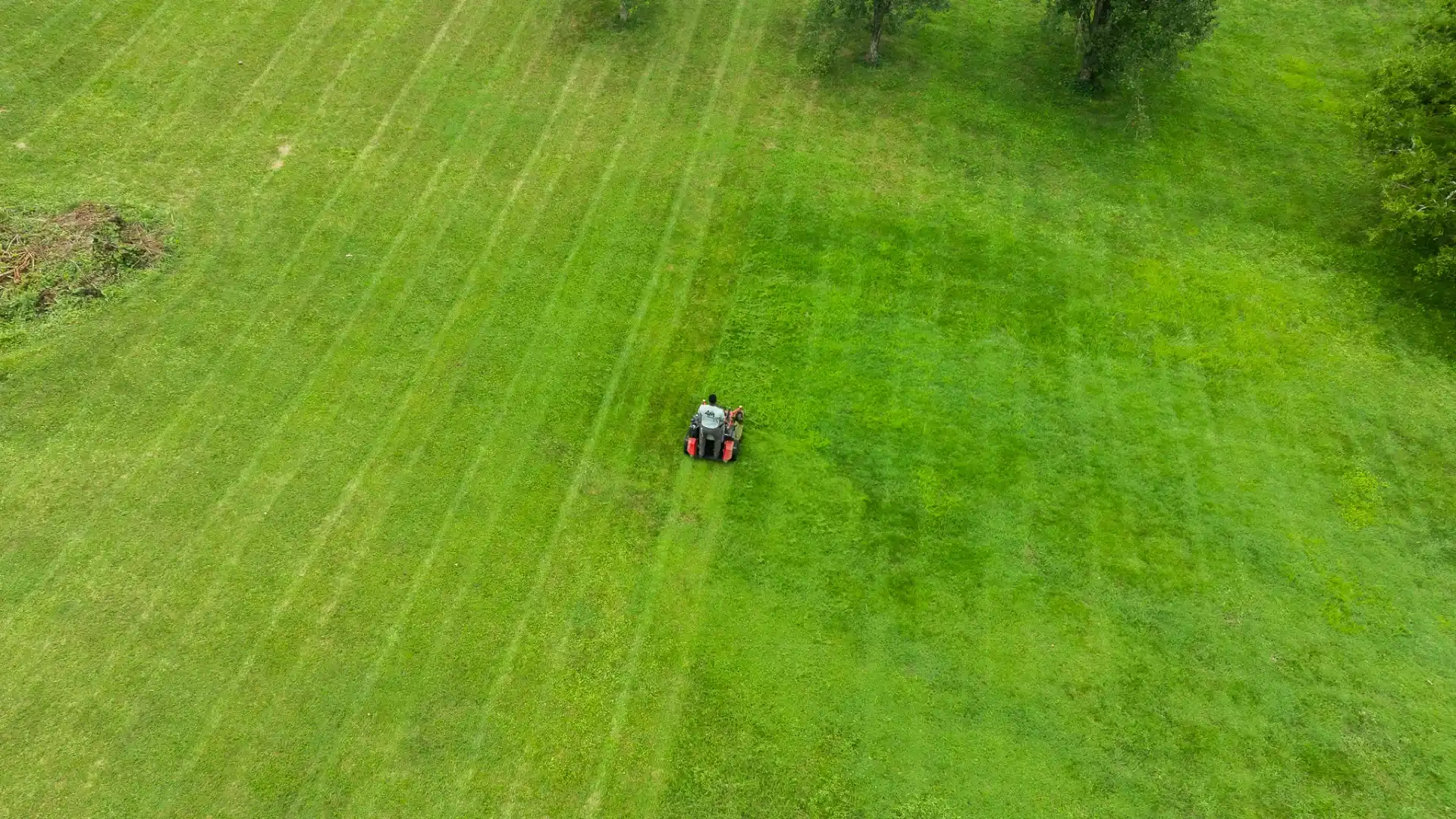
Multi-pass leaf removal that protects turf and catch basins.
Vacuum collection through fall, hauled off site every pass. Catch basins cleared. Mulching-mow option for light volume. Coordinated across your portfolio so no property goes from green to buried.
Wait for "all the leaves" to fall and you've already lost turf
The single biggest mistake on commercial leaf removal is waiting for a one-pass cleanup after the canopy is bare. By that point, the bottom layer of wet leaves has been smothering turf for three weeks and the catch basins are already clogged.
A two- or three-pass schedule through October and November keeps turf breathing, drains clear, and the property looking maintained the entire way through fall instead of all-at-once in late November.
Vacuum Collection
For properties with heavy canopy and high leaf volume. Blown into windrows, vacuumed into the truck, hauled off site the same day.
- Truck-mounted vacuum and hauling
- No piles or windrows left behind
- Multiple passes through the season
- Disposal handled through our channels
Mulching Mow
For lighter leaf coverage, high-blade mowers with mulching kits chop leaves fine enough to filter into the turf canopy and break down over winter.
- Returns nutrients to the soil
- Lower cost than vacuum + haul
- Used when leaf depth is appropriate
- Combined with final vacuum pass as needed
The part of leaf removal that prevents the flooded parking lot
Cincinnati and Northern Kentucky both ordinance against blocking storm drains with yard waste. More to the point: a clogged catch basin during a fall rainstorm is how parking lots flood and how property managers get the late-night "water everywhere" call.
Cleared every pass
Every leaf removal visit includes a sweep of all catch basins on the property. Debris cleared, grates exposed, drainage paths open.
Removed in our trucks
What we pull out of the basins goes in the truck with the rest of the leaves. Nothing left at the curb, nothing pushed into your dumpster.
Documented when needed
For properties with prior drainage problems or municipal compliance concerns, we can document basin clearance per visit. Helps when a property manager has to prove maintenance to the city or insurance.
Two to three passes is the right answer for most properties
Heavy-canopy sites get three, lighter sites get two. We tune per property after the first season on the program.
Pass 1
Mid to late OctoberFirst major leaf-drop. Vacuum the heavy zones, mulching mow on lighter areas, catch basins cleared.
Pass 2
Early to mid NovemberMiddle of the canopy drop. Heaviest-volume pass on properties with oak, maple, and sycamore. Required on heavy-canopy sites, optional on lighter ones.
Pass 3
Late NovemberFinal pass after the canopy is bare. Pulls everything that's landed since pass 2, clears beds, gets the property put to bed for winter.
What property managers ask about leaf removal
When should commercial leaf removal start?
+
Vacuum collection or blowing into piles?
+
What's the mulching mow option?
+
Why does catch basin clearance matter so much in fall?
+
How many passes do you make through the season?
+
What about leaves that fall after the final cleanup?
+
Do you haul leaves away or pile them on site?
+
Is leaf removal included in fall cleanup, or priced separately?
+
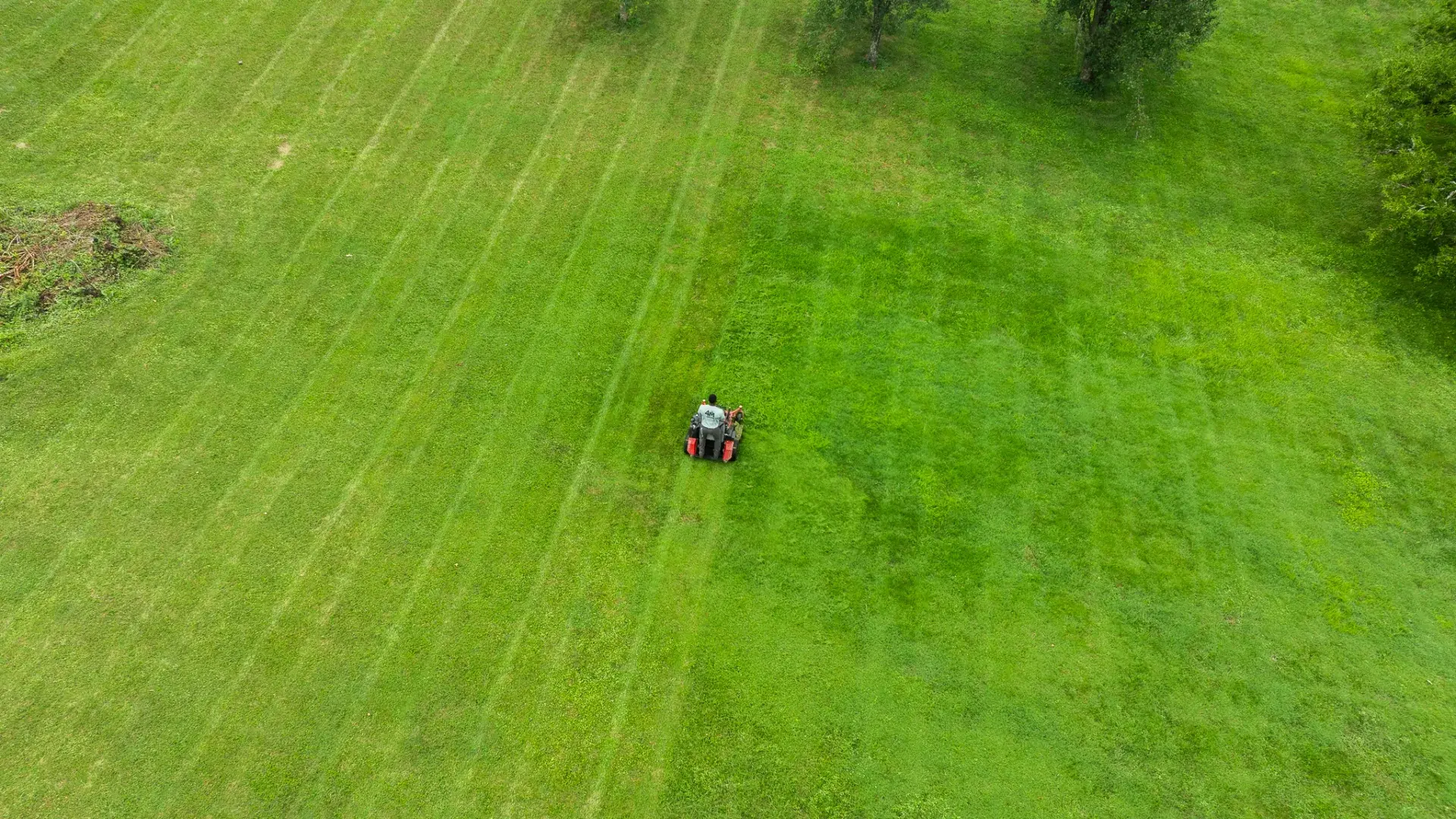
Lock your portfolio into the fall schedule
October fills up fast. Send your property list now and we'll put the pass schedule on the calendar before the first heavy drop hits.