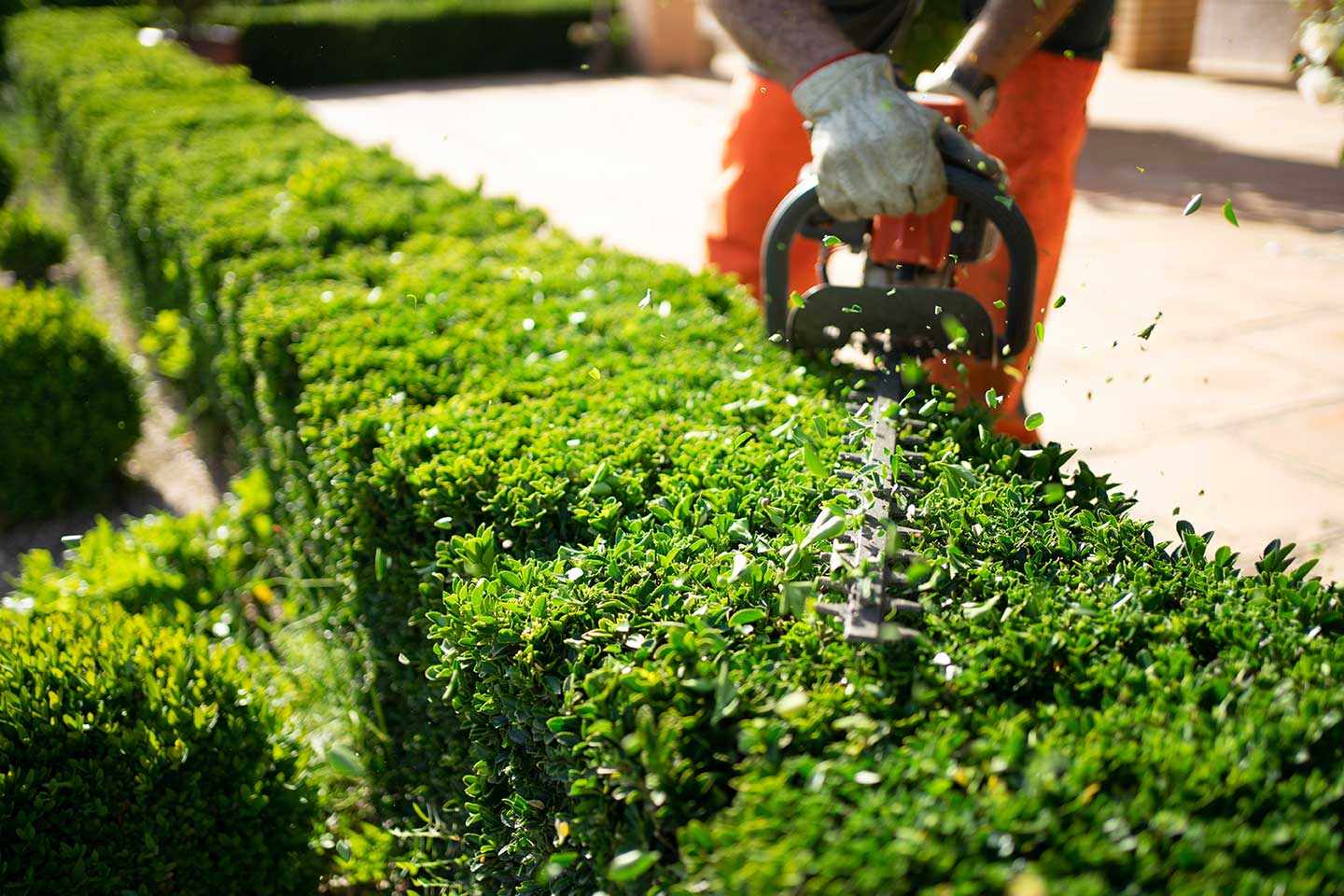
The edges are the cut people remember.
String trimming around every obstacle, edging along every sidewalk and bed line, and a full blow-off afterward. Included on every visit, every property. It's the discipline that separates a real commercial cut from a quick mow.
A mowed property without clean edges still looks unfinished
Tenants, prospects, and property owners don't notice a beautiful mow. They notice when the bed lines are ragged, the curb is hidden under grass, and the tree rings have a halo of overgrowth. The edges are what say "maintained" or "neglected." Nothing else communicates it as fast.
On a 4M property, trimming and edging happen on every visit, every property, no exceptions. It's the half of cut-and-trim that separates a real commercial program from a quick lawn cut.
What gets trimmed and edged on every visit
If the rider can't reach it, the trimmer does. If it's a horizontal-to-vertical transition, it gets edged. No surface left unfinished.
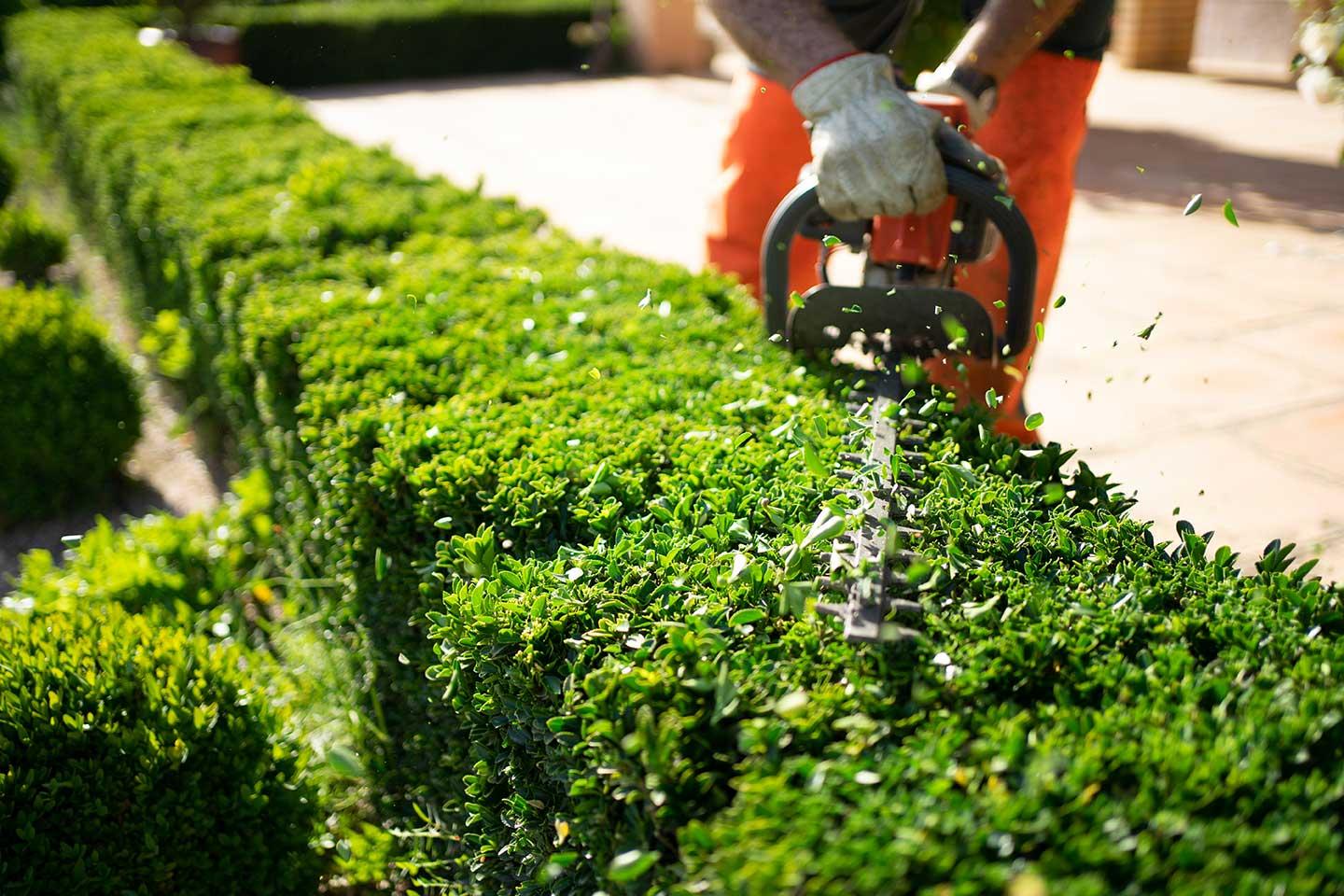
Every commercial property has three kinds of edge
Each one needs a different tool and a different discipline. Getting all three right is what makes a property read as professionally maintained.
The hard edge
Sidewalks, curbs, driveways, and parking lot perimeter. Maintained with a stick edger or string trimmer on its side. Clean vertical wall between turf and concrete. Hides the curb when neglected.
The bed edge
The transition from turf to mulch bed. Spade-cut at spring cleanup, maintained with weekly trim. A crisp natural edge looks better than plastic or metal and is cheaper to maintain long-term.
The obstacle edge
Tree rings, posts, signs, light bases, utility boxes, anything the mower can't get around. String trimmed flush at the same height as the surrounding turf so the property reads as one continuous cut.
String trimmer damage is the long-term cost nobody quotes
Tree bark gouged by string trimmers is one of the most common and most expensive landscape liabilities on commercial properties. We treat it as preventable, because it is.
The damage looks small at first
A repeated nick at the base of a tree looks minor. Three seasons later the tree shows decline, bark loss, and eventually structural failure. The replacement cost is 50 to 100 times the cost of doing it right.
Mulch rings prevent it entirely
We chip or mulch around trees so the trimmer line stops at the ring edge, not the bark. Most properties don't have rings when we start, so we install them on the first cycle and refresh annually.
Trimmer technique matters
Even where there's no ring, the trimmer head stays angled away from the trunk and never closer than a half inch. Crew training is the only thing that makes this consistent across a 40-property portfolio.
Blow-off is what closes the visit
Clippings on sidewalks, curbs, and building thresholds are the fastest "this property wasn't finished" signal a tenant or visitor can read. We blow off every hard surface before the truck leaves.
What gets blown off
All sidewalks and walkways, every curb line, parking lot perimeter where mowing happened, building thresholds, mulch beds, and any clipping cast outside the turf footprint.
Why it's not optional
Clippings on walkways are a slip hazard, clippings blown into storm drains are a code violation, and clippings on building thresholds get tracked inside. Every reason to blow off, no reason to skip.
What property managers ask about trim and edge work
Is trimming and edging included in your mowing contracts, or is it extra?
+
What gets trimmed on every visit?
+
How do you prevent string trimmer damage to tree trunks?
+
How do you edge bed lines if there's no metal edging?
+
Do you blow off clippings after trimming?
+
What about hard-to-reach areas like steep slopes or under shrubs?
+
How often do edges need to be re-cut?
+
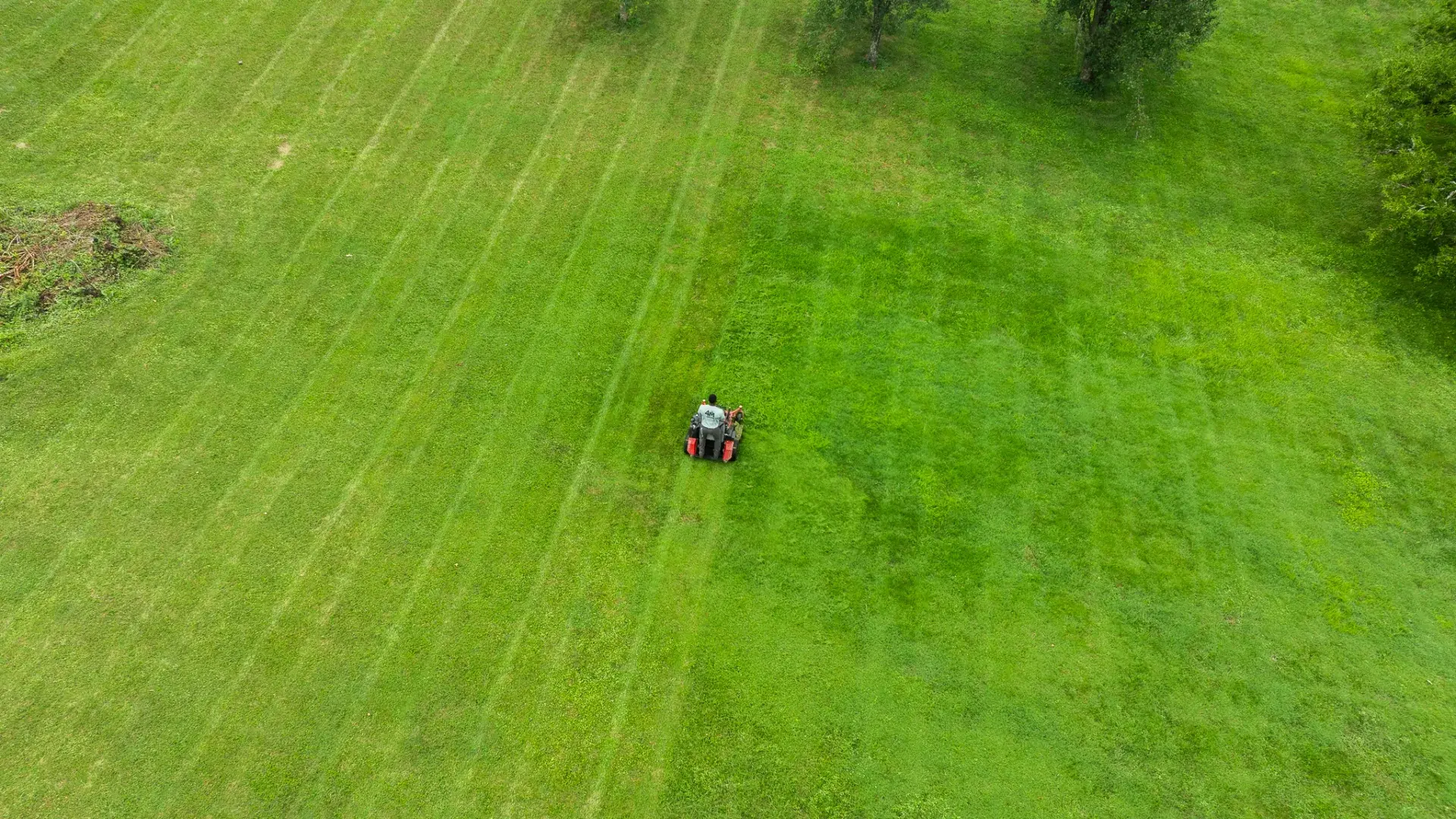
Stop paying for a mow that leaves edges undone
Send us your property list. Every visit, every property: cut, edge, trim, and blow-off included. No upsells, no surprise invoices, no half-finished work.